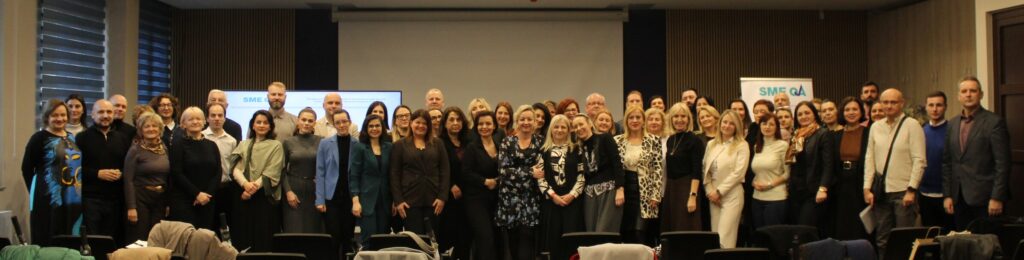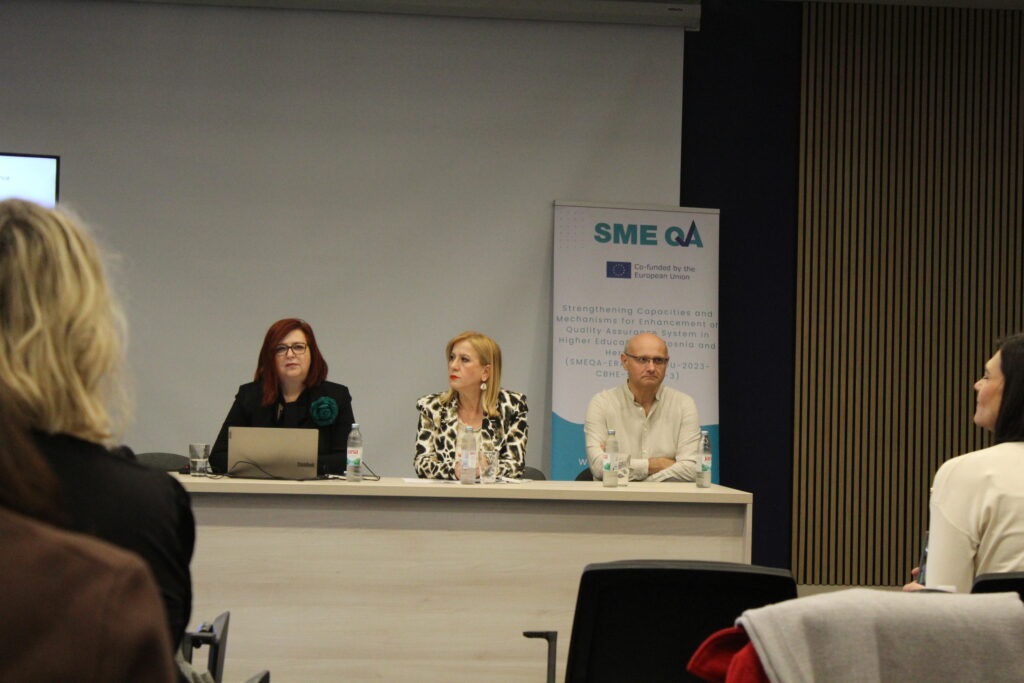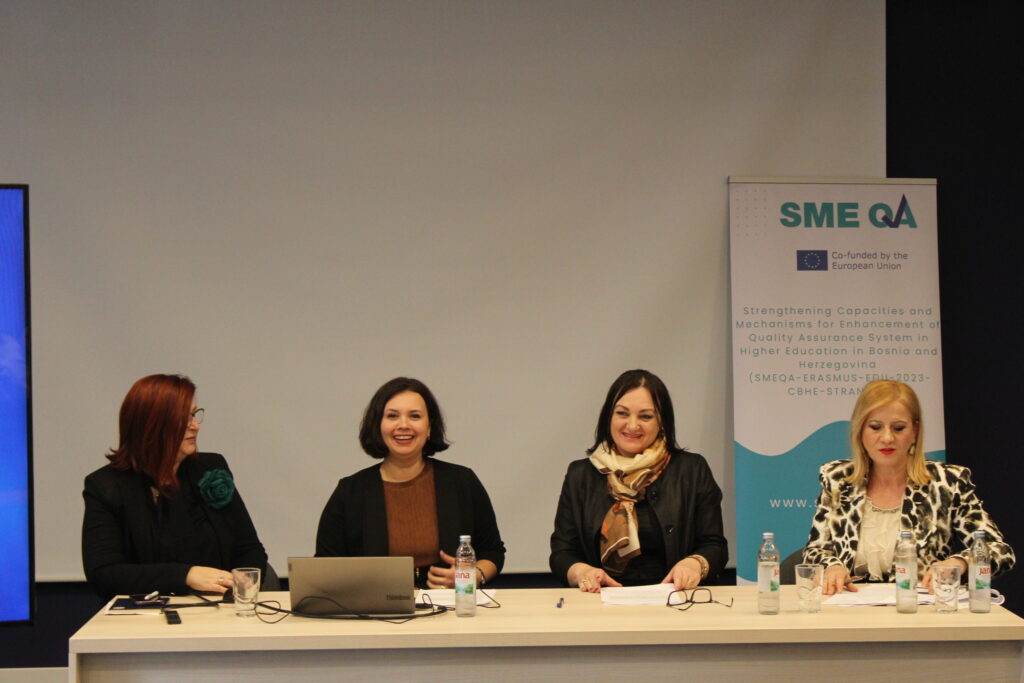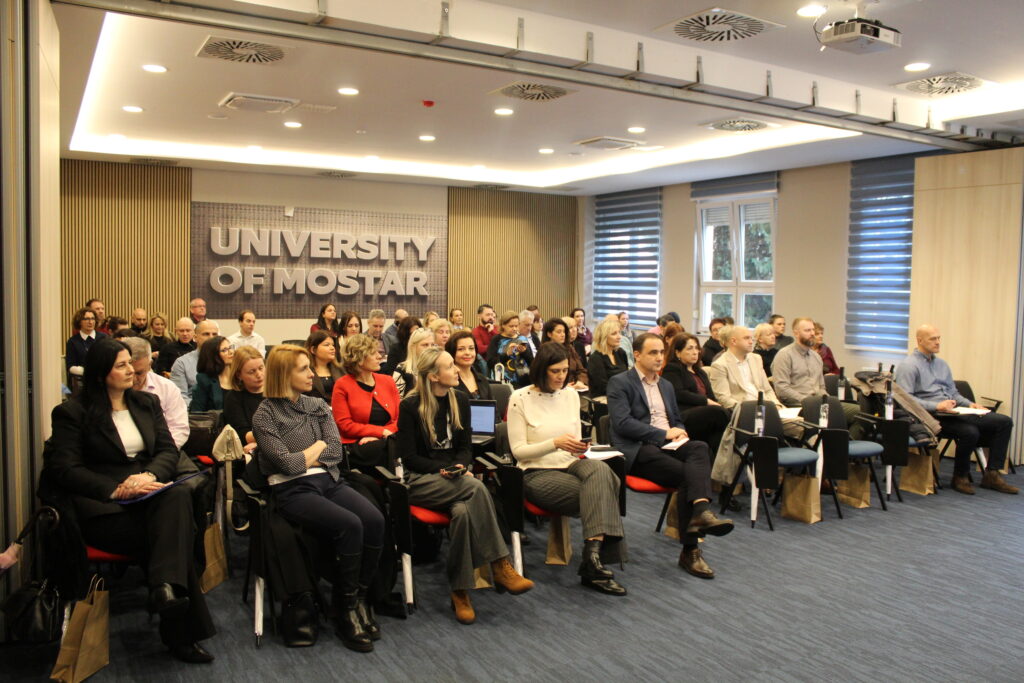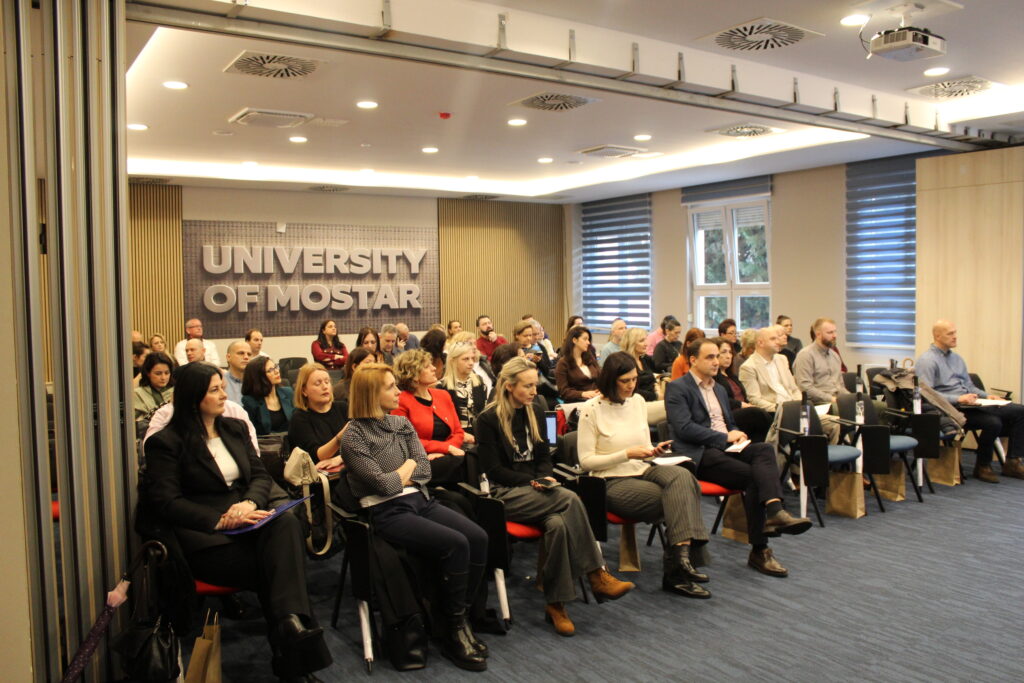
On 5 February 2026, the University of Mostar hosted a workshop entitled “Follow-up Activities: Strengthening Capacities of Quality Assurance in Higher Education Systems”, organised within the framework of the Erasmus+ Capacity Building in Higher Education project SMEQA – Strengthening Capacities and Mechanisms for Enhancement of Quality Assurance System in Higher Education in Bosnia and Herzegovina (Project No. 101128889-ERASMUS-EDU-2023-CBHE-STRAND 3).
The workshop brought together project partners – representatives of higher education institutions, competent education authorities, quality assurance bodies, and ministries to address the development and implementation of follow-up activities within external quality assurance and accreditation processes in Bosnia and Herzegovina. The event was held at the Conference Room of the SUM TV building, University of Mostar.
Opening remarks were delivered by representatives of the University of Mostar, the Agency for Development of Higher Education and Quality Assurance of Bosnia and Herzegovina (HEA), and the SMEQA project coordination team. The introductory session outlined the objectives of the workshop and emphasised the importance of strengthening systematic follow-up mechanisms in accreditation procedures in line with European Standards and Guidelines for Quality Assurance in the European Higher Education Area (ESG).
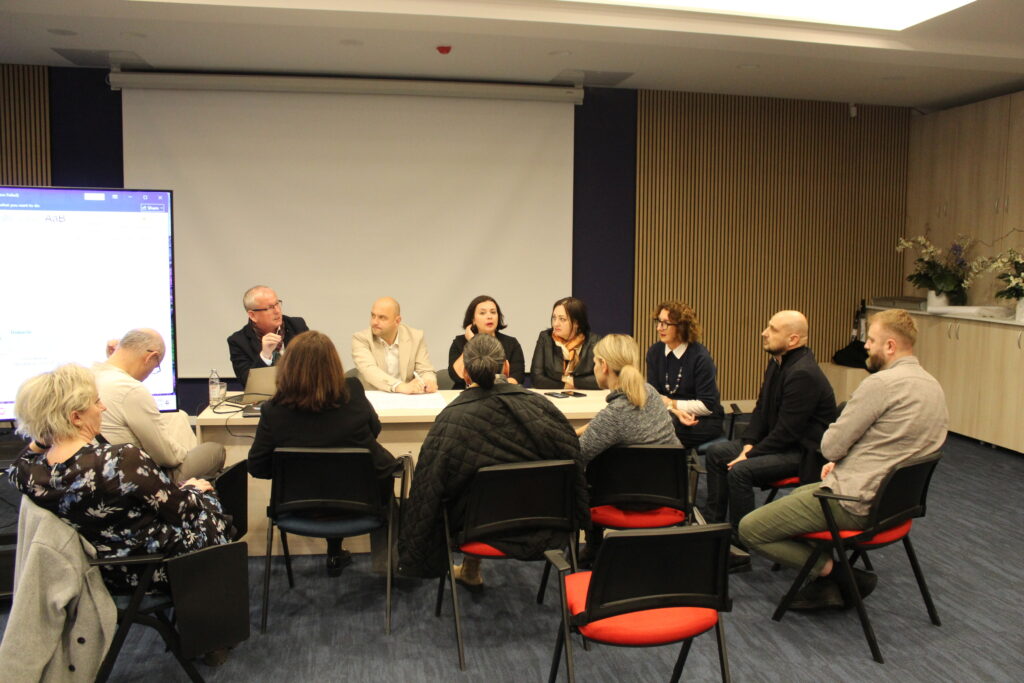
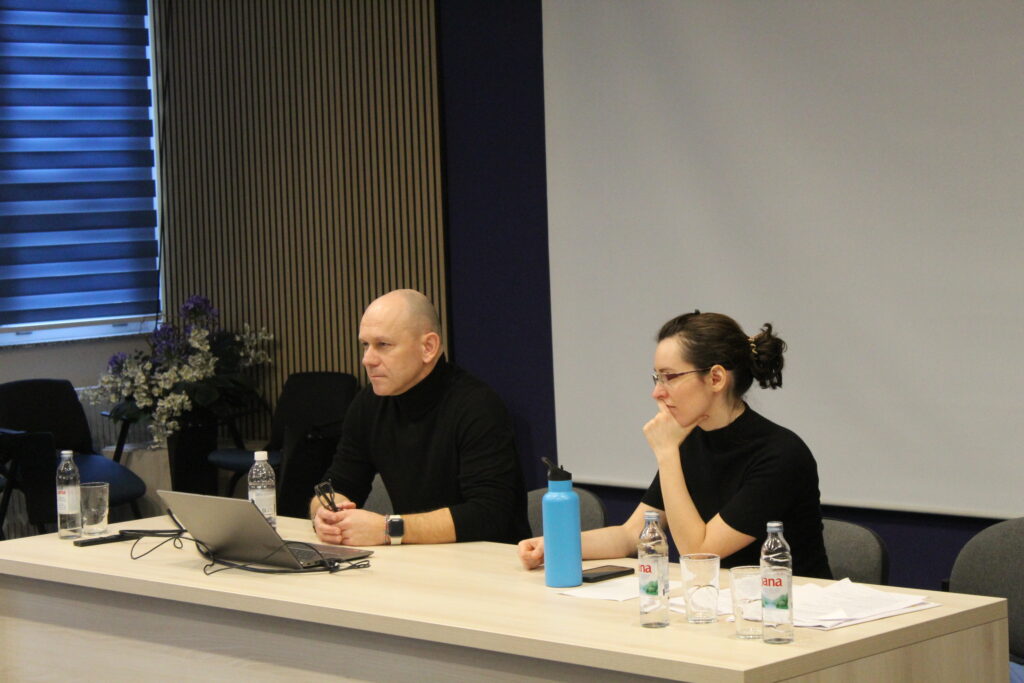
The working sessions addressed the regulatory and procedural framework governing follow-up activities in Bosnia and Herzegovina, including institutional roles and responsibilities, alignment with ESG requirements, and mechanisms for monitoring the implementation of recommendations arising from accreditation. Practical perspectives were provided through presentations by the Ministry of Education, Science, Youth, Culture and Sports of Central Bosnia Canton and the University of Vitez, focusing on policy implementation, development of action plans, institutional responses to accreditation recommendations, and identified challenges and success factors.
An international dimension was introduced through a presentation on the Slovenian experience with follow-up activities in accreditation processes, delivered by a representative of the Slovenian Quality Assurance Agency (SQAA), highlighting examples of good practice and lessons learned that may inform further development within Bosnia and Herzegovina.
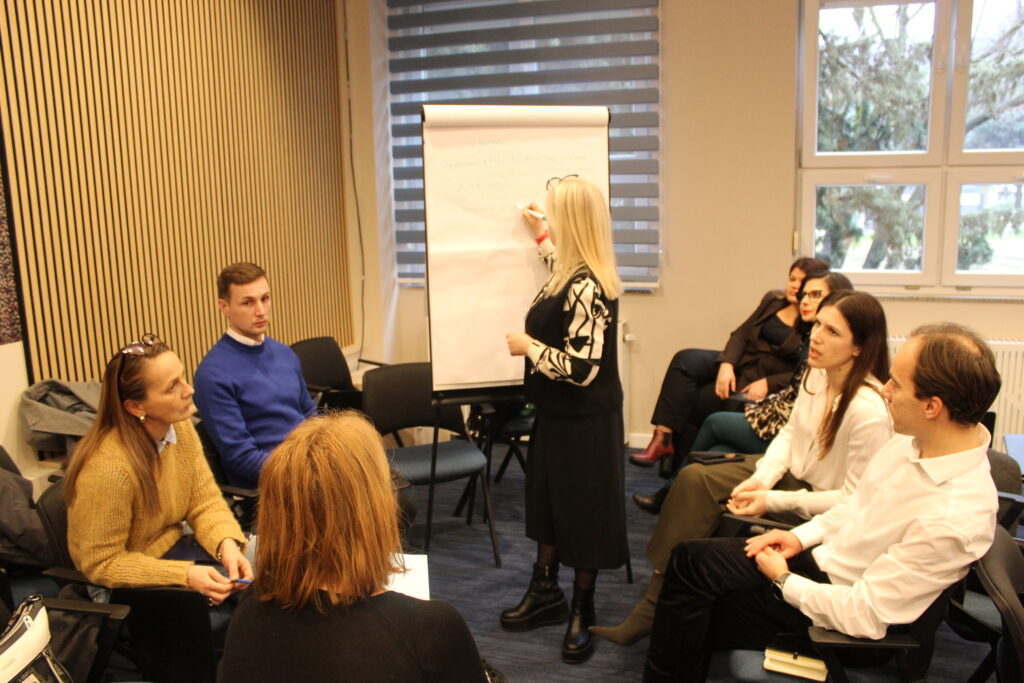
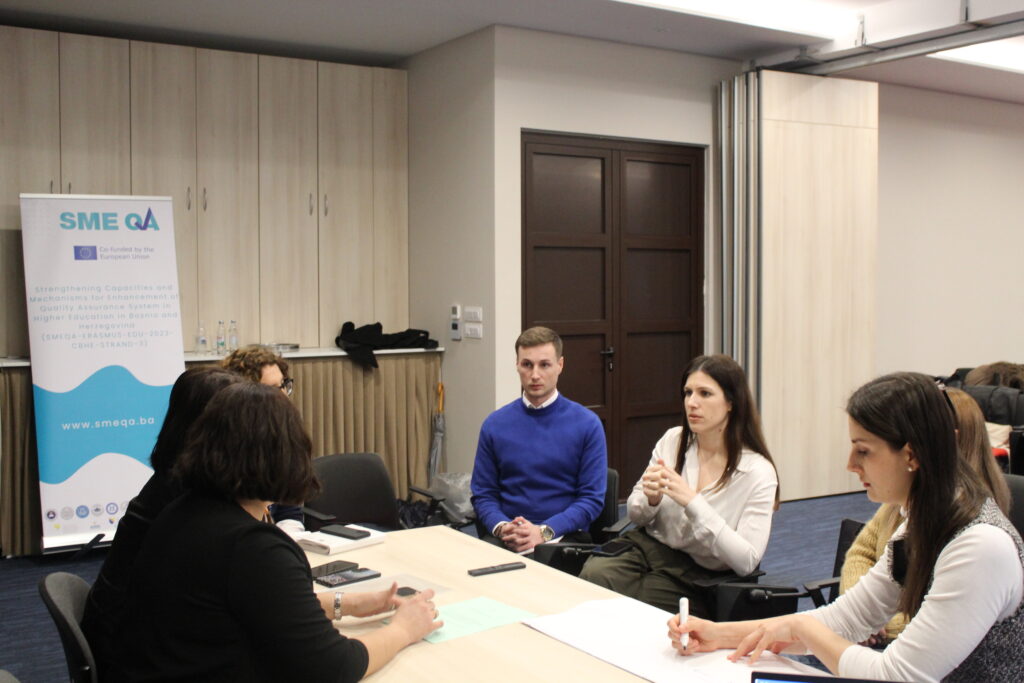
The afternoon programme was dedicated to an interactive World Café session designed to facilitate structured exchange among participants. Discussions focused on adjusting institutional and study-programme-level action plans, ensuring effective implementation of accreditation recommendations, and strengthening monitoring and reporting mechanisms. The session concluded with the presentation of key findings, identified challenges, examples of good practice, and practical recommendations for further development of follow-up procedures.
The workshop concluded with a summary of outcomes and closing remarks emphasising the continued importance of cooperation among all relevant stakeholders in strengthening external quality assurance mechanisms and enhancing the overall quality of higher education in Bosnia and Herzegovina.
The activity represents a significant contribution to the objectives of the SMEQA project and to the ongoing efforts aimed at improving the effectiveness, transparency, and sustainability of quality assurance processes in the higher education system.