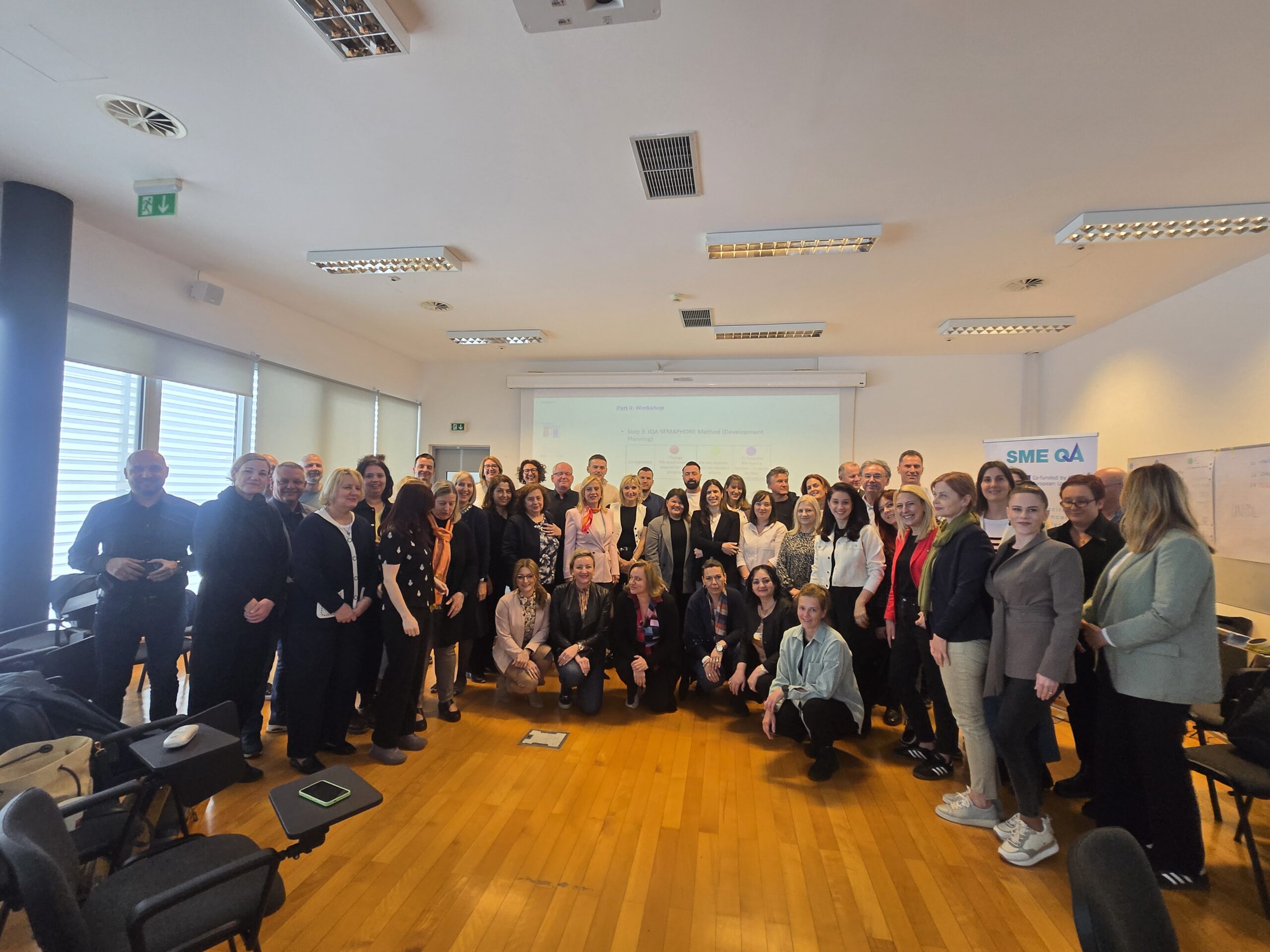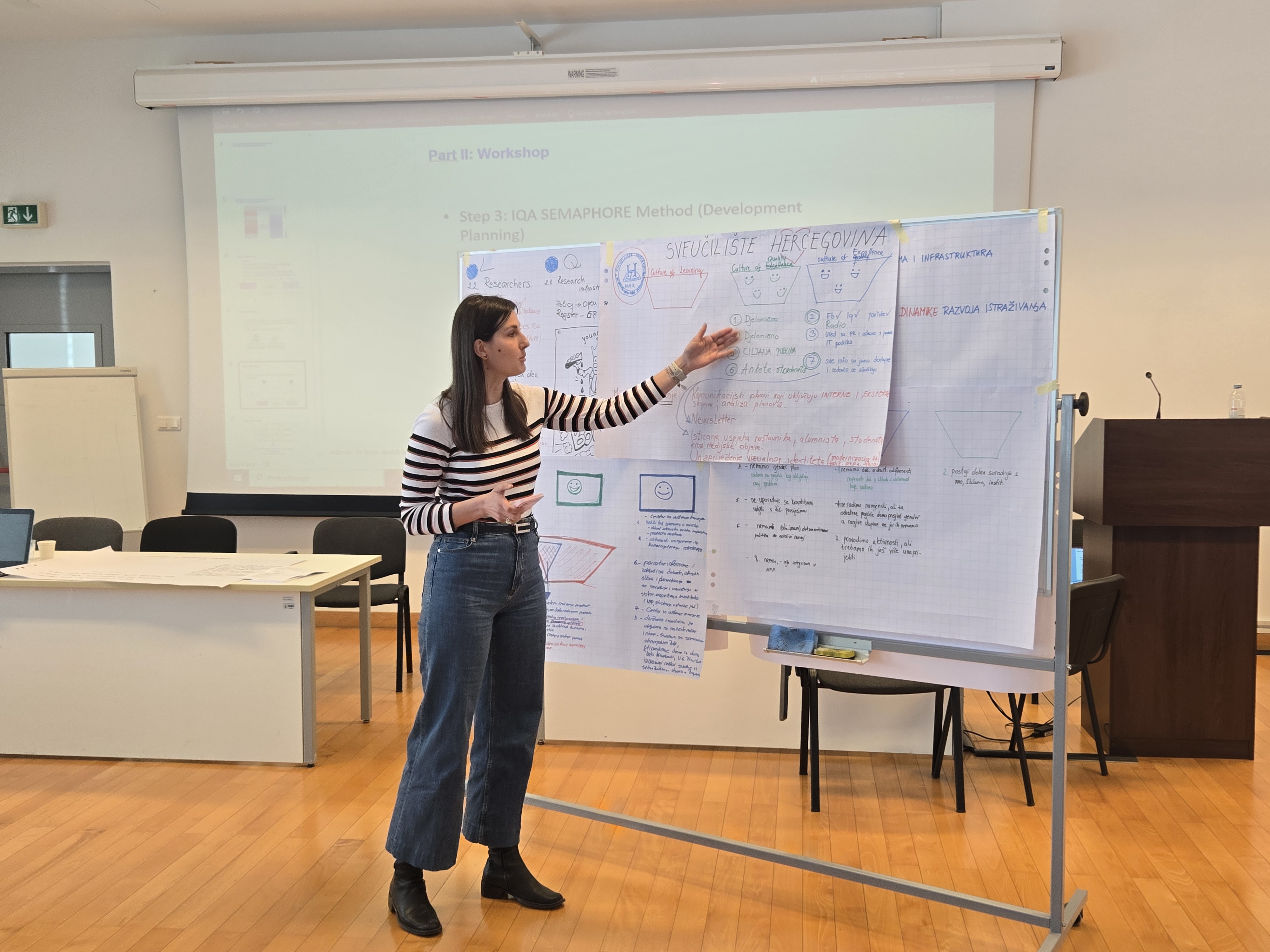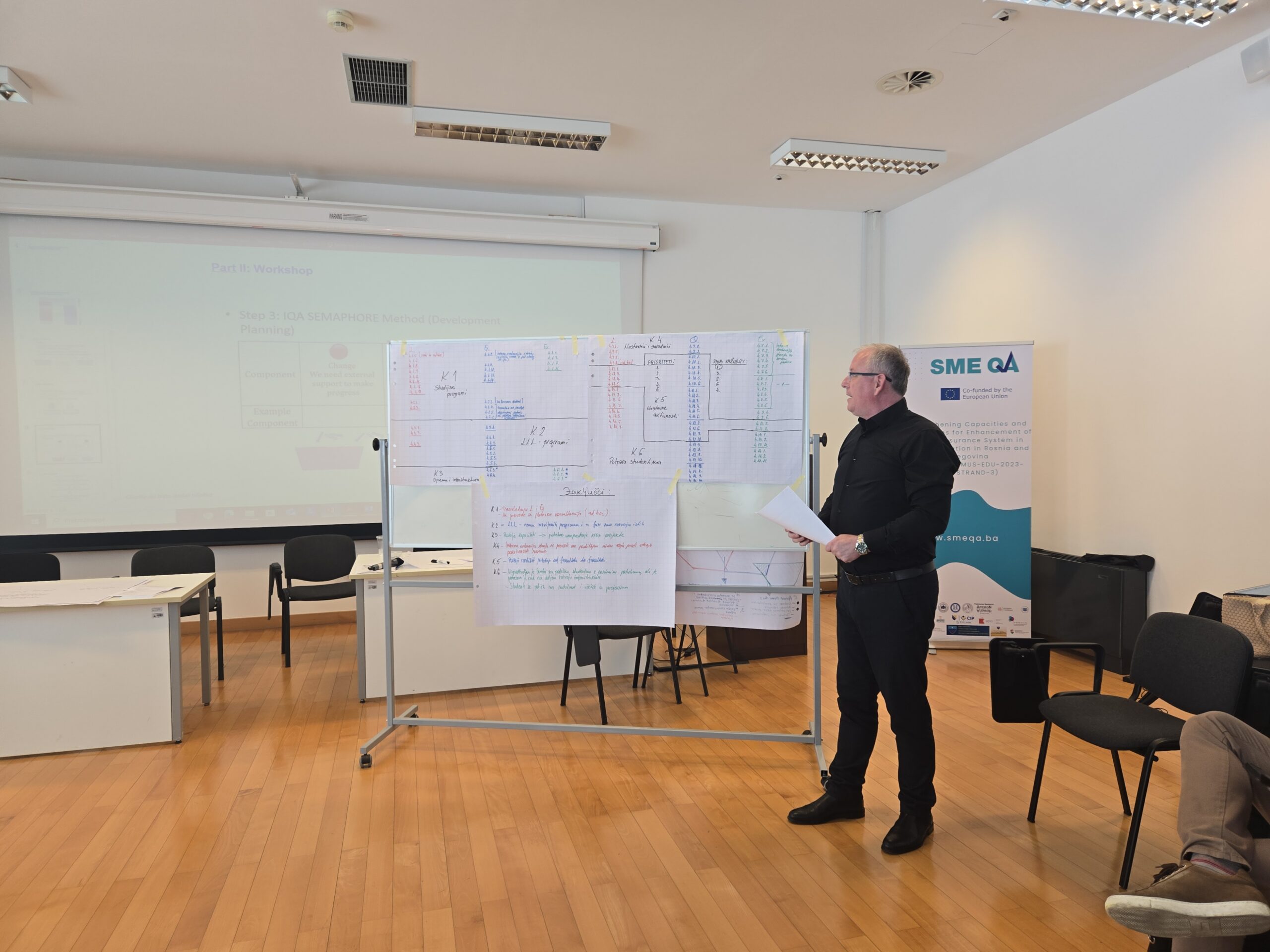
From April 14 to 16, 2025, representatives of the Faculty of Science and the Catholic Faculty of Theology at the University of Split hosted a three-day Workshop on internal quality assurance as part of the Erasmus+ project SMEQA – Strengthening Capacities and Mechanisms for Enhancement of Quality Assurance System in Higher Education in Bosnia and Herzegovina.
The study visit was held at the University Library in Split and gathered higher education experts, representatives of relevant ministries, and quality assurance agencies.
The main focus of the program was the development and implementation of a multidimensional internal quality assurance (IQA) model, which integrates standards of excellence across several key areas: governance, scientific research, cooperation with industry, student experience, social responsibility, and public communication. This model was presented as a dynamic system that supports the strategic development of higher education institutions, with a strong emphasis on science as the foundation of institutional quality, as well as on supporting young researchers, PhD candidates, and research mobility.
Day 1: Presentations and Theoretical Framework
The first day was dedicated to the theoretical foundations of the IQA model and presentations of the quality standard classes. Lecturers included:
- Prof. Mile Dželalija, PhD – Introduction to the multidimensional IQA model
- Assoc. Prof. Perica Bošković, PhD – Standards for IQA system governance
- Assist. Prof. Gordan Radobolja, PhD – Standards for excellence in student experience
- Assist. Prof. Mija Marinković, PhD – Fostering project orientation and scientific independence among young researchers
- Ivana Popović, PhD candidate – The doctoral student perspective within the IQA standards
- Prof. Jadranka Garmaz, PhD and Doris Žuro, MA in Sociology – The social dimension in higher education
Day 2: Interactive Workshops
The second day featured interactive workshops aimed at analyzing and adapting questionnaires for implementing the IQA model in partner institutions. Through self-assessment, reflection, and experience-sharing methods, participants identified key strengths, challenges, and developmental priorities of their internal quality assurance systems.
Day 3: Project Coordination
The final day focused on project coordination activities. Meetings of the Consortium Board and the Quality Board were held, past results were evaluated, and plans for upcoming activities were presented.
This study visit further strengthened inter-institutional and international collaboration and reaffirmed the importance of an inclusive and development-oriented approach to quality assurance in higher education.